Dive into our essential guide for new optometrists, detailing the top 10 indispensable ophthalmic equipment for clinics. Equip your space, ensuring unparalleled eye care from day one.
.png)
.svg)
.svg)
Starting a new optometric clinic? Stepping into the vast, intricate domain of eye care? A world filled with lenses, lights, and layers awaits you. Before you open those doors and welcome patients, it's essential to be armed with the right tools. So, what are these indispensable gadgets every fledgling clinic needs? Let’s unfurl the list!

An ophthalmologist without a slit lamp is like an artist without a brush. This tool, combining a high-intensity light with a microscope, lets you delve into the anterior segment of the eye. Look for
inflammations, injuries, or infections - the slit lamp reveals them all.
A Glimpse of the Past: The slit lamp's ancestors are the simple handheld magnifying glasses. But over the decades, as microscopy evolved, so did our ability to inspect the minute details of the eye.
Innovations on the Horizon: Expect wireless connectivity in future slit lamps, enabling instant transfer and analysis of data, AI-assisted diagnosis, and even integrated telehealth capabilities.

Glasses or contacts? The phoropter is your go-to device. As your patient looks through it, the rotating lenses help pinpoint the perfect prescription, ensuring the world remains in sharp focus.
Historical Significance: The concept of altering vision with lenses dates back centuries, from Nero's emerald viewing monocle to Benjamin Franklin's bifocals. The modern phoropter is a culmination of these innovations.
What's Next: Customizable, digital phoropters with more ergonomic designs and computerized feedback are paving the way.
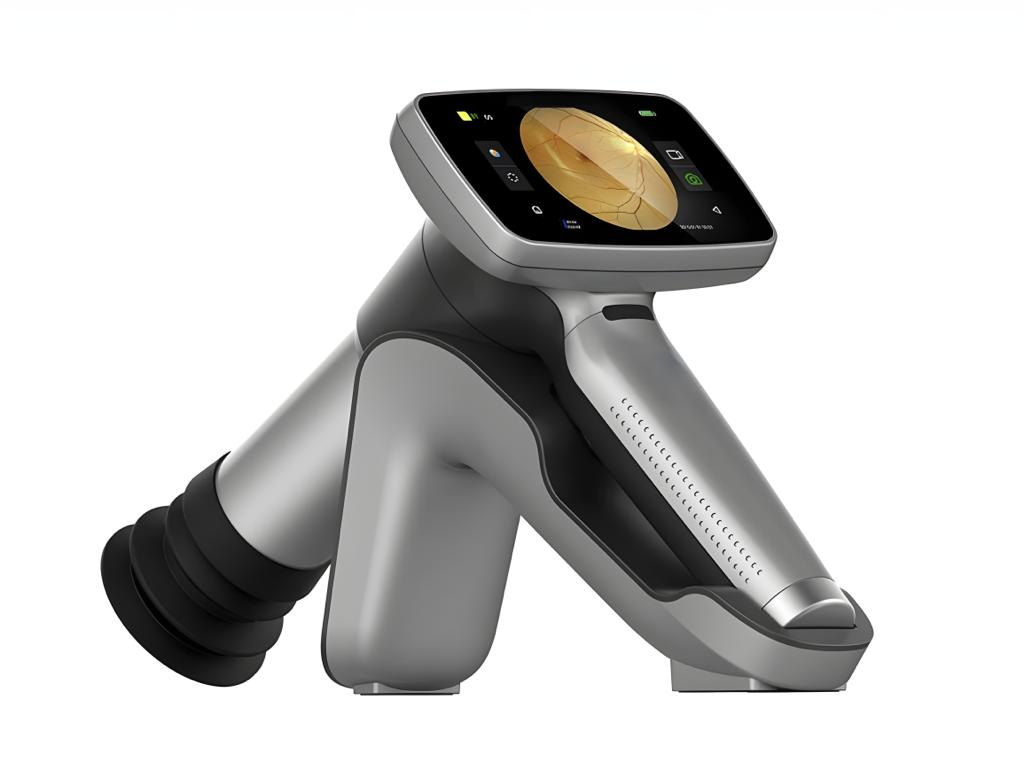
The back of the eye holds clues to many conditions. Diabetes, hypertension, or even macular degeneration; the retinal camera captures detailed images of the retina, helping you diagnose with precision.
The Journey: Earlier, direct visualization using an ophthalmoscope was the only way to view the retina. Today's retinal cameras, with their digital prowess, are lightyears ahead.
The Future Beckons: With the integration of AI, future cameras will instantly identify pathological changes, streamlining the diagnostic process.

Glaucoma, the silent thief of sight, is caused by increased eye pressure. The tonometer, with a gentle puff of air or a delicate probe, measures this pressure, aiding in early detection and prevention.
From Touch to Tech: Initially, physicians gauged eye pressure by touch. Now, tonometers deliver precise measurements in seconds.
Innovations in Sight: Non-contact tonometers that require no anesthetic drops and give readings with minimal patient discomfort are emerging.

For a quick, automated refractive analysis, the autorefractor is your ally. It estimates lens prescriptions swiftly, making the process smooth for both the doctor and the patient.
Evolution: Gone are the days of trial and error with manual lenses. Autorefractors have revolutionized speed and accuracy in prescription determination.
The Road Ahead: Look out for portable, hand-held devices with cloud-based data storage and sharing capabilities.

Peering into the deeper structures of the eye, especially the retina, requires the trusty ophthalmoscope. With its illuminating capabilities, it's a window into the soul of the eye.
Past Glances: The ophthalmoscope's invention in the 19th century was groundbreaking. Before this, the interior details of a living eye were a mystery. Helmholtz’s ophthalmoscope in 1851 opened doors to direct visualization of the retina.
A Bright Future: Anticipate wireless ophthalmoscopes with high-definition imaging and integrated software that can highlight potential problem areas in real-time.

Corneal shape and curvature, vital for contact lens fittings, are gauged by the keratometer. It ensures contacts fit comfortably and provide clear, uninhibited vision.
Historical Dive: The keratometer, also known as an ophthalmometer, had its origins in the late 19th century. Its main objective was to understand the corneal curvature, essential for determining astigmatism.
Upcoming Waves: Keratometers of the future might have enhanced topographical capabilities, offering 3D representations of the cornea's surface, ensuring even more precise contact lens fittings.

Blind spots or vision loss, often unnoticed by patients, come to light with the perimeter. It maps the field of vision, highlighting anomalies and aiding in diagnosing conditions like glaucoma.
Journey Through Time: The concept of mapping one's visual field has been around since the 1600s. However, the manual, hand-moved perimeters have now given way to automated, computerized systems.
Horizons to Watch: We can expect future perimeters to be integrated with AI, immediately analyzing results, comparing them with vast databases, and flagging anomalies.

If a patient walks in with a pair of glasses and no prescription details, fret not. The lensmeter, with its analytical prowess, reads lens power, providing insights into the patient's visual needs.
From Beginning to Now: Originally known as a focimeter, the lensmeter has been used for over a century to determine the prescription of eyeglasses. From manual systems with moving parts to digital displays, the lensmeter has seen vast improvements.
Visions of Tomorrow: Future lensmeters might automatically sync with electronic health records, streamlining the patient check-in process and maintaining an updated record of prescription changes.

For a reliable and comfortable patient experience, turn to exam chairs and stands. These pieces of equipment are fundamental in ensuring precise examinations, optimizing the patient's position and the optometrist's access.
A Look Back: Exam chairs and stands have evolved significantly over the years. Earlier models, while functional, lacked the comfort and adjustability of today's designs. Modern advancements have not only made these chairs more patient-friendly but also have optimized them for ease of use by practitioners.
The Next Leap: As we look towards the future, expect innovations that offer even greater ergonomic designs, ensuring minimal strain on both the patient and the practitioner. There could also be potential for integrating technology, such as automated adjustments or AI-assisted diagnosis tools, directly into the chairs and stands.
When choosing equipment, consider aspects like warranty, after-sales service, user reviews, and technological advancements. While initial cost is a factor, think long-term. Often, a higher initial investment can lead to fewer headaches and better patient satisfaction in the future.
Starting an ophthalmic clinic is no small feat. However, with the right tools at your disposal, you're not just setting up a clinic; you're establishing a sanctuary for vision. As you embark on this journey, remember: It's not just about having the equipment. It's about mastering their use, ensuring every patient leaves with a clearer, brighter view of the world.
Discover the best autorefractors for your practice. Compare models like the LS-4 Slit Lamp, SW-900 Vision Screener, and more to find the right fit for your needs.
.svg)
Explore reputable manufacturers and contact authorized distributors to invest in top-quality ophthalmic equipment for a successful optometry clinic. Prioritize quality, durability, and after-sales support while comparing prices and reviews to ensure a satisfactory purchasing experience. Utilize industry resources to make informed decisions and enhance your clinic's efficiency with the right ophthalmology equipment.
In the rapidly evolving field of ophthalmology, advancements in technology play a crucial role in improving patient outcomes and revolutionizing eye care practices. Ophthalmic equipment companies are at the forefront of these innovations, developing state-of-the-art devices and tools that enable accurate diagnostics, effective treatments, and enhanced vision correction options. In this article, we will explore the top 10 ophthalmic equipment companies that are shaping the future of vision technology.


.png)

%402x.svg)
